SIUC Physics Seminar
School of Physics and Applied Physics, Southern Illinois University--Carbondale
2026 January 23 Friday 4:00 PM:
Physics Seminar in Neckers 440
Title: Defect formation and Interfacial Characteristics in Graphene Reinforced Aluminum Matrix Composites
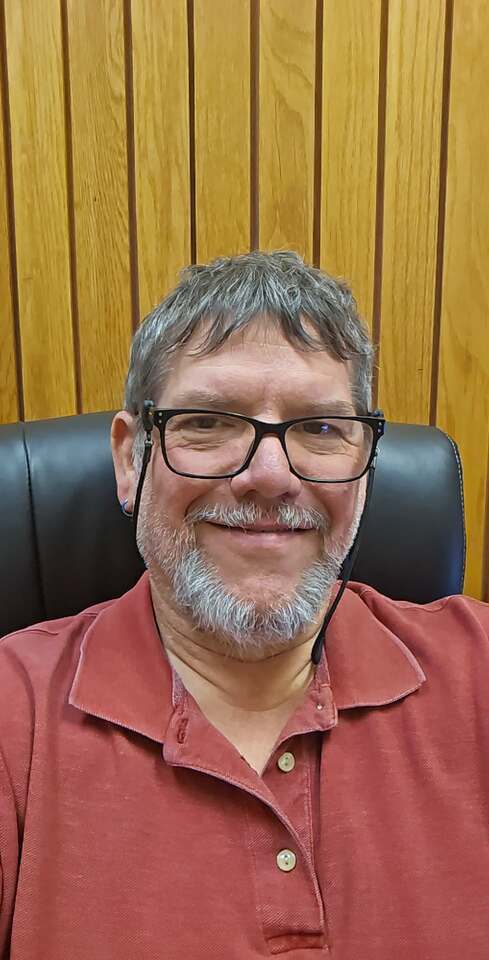
Speaker: Rob H. Mason
Affiliation: Southern Illinois University--Carbondale
 Abstract:
Aluminum matrix composites (AMC) are highly desirable for applications that require
strong yet lightweight materials for use in extreme conditions, such as electrical
transmission systems and building infrastructure. Graphene-reinforced aluminum
composites are promising for improving electrical, thermal, and mechanical properties
in AMCs, especially towards light weight applications. Although promising, the
formation of different bonds at the Al/graphene interface can cause agglomeration
and phase separation of the metal matrix making the synthesis of graphene-reinforced
AMC challenging. In this work, based on the electron charge transfer analysis
extracted from results of the first principles Density Functional Theory (DFT)
calculations, we will discuss the various types of bond characteristics at the
Al/graphene interface that lead to defect formation at the interface, which may
seed the phase separation during the synthesis. A deeper understanding of the bond
formation and their associated energetics can pave the way for better synthesis
approaches of graphene-reinforced AMCs.
Abstract:
Aluminum matrix composites (AMC) are highly desirable for applications that require
strong yet lightweight materials for use in extreme conditions, such as electrical
transmission systems and building infrastructure. Graphene-reinforced aluminum
composites are promising for improving electrical, thermal, and mechanical properties
in AMCs, especially towards light weight applications. Although promising, the
formation of different bonds at the Al/graphene interface can cause agglomeration
and phase separation of the metal matrix making the synthesis of graphene-reinforced
AMC challenging. In this work, based on the electron charge transfer analysis
extracted from results of the first principles Density Functional Theory (DFT)
calculations, we will discuss the various types of bond characteristics at the
Al/graphene interface that lead to defect formation at the interface, which may
seed the phase separation during the synthesis. A deeper understanding of the bond
formation and their associated energetics can pave the way for better synthesis
approaches of graphene-reinforced AMCs.
Biography:
In 1997 I earned an M.S. in Physics from Southern Illinois University Edwardsville (SIUE).
I then spent the next 27 years teaching at the community college level with the over 25 years
at Illinois Eastern Community Colleges (IECC). During my time there I have dedicated myself
to helping my students to attain their academic and career goals. In addition to further
study of physics, I also studied pedagogical techniques and advanced mathematics. This led
to an M.A. in Mathematics Education from Eastern Illinois University (EIU) in 2016.
One of the areas on which I focused was the use of computational methods to allow students
to tackle more complex and realistic problems. These techniques not only provided students
with useful skills in the classroom, but they also gave students a competitive edge after
graduation in a wide range of STEM fields. In 2018, I began working with the group
Partnership for Introduction of Computation into Undergraduate Physics (PICUP). The goals
of this group aligned with my own and inspired in me a desire to pursue further study in
computational physics. In 2020, at 52 years of age, I began my doctoral studies at
Southern Illinois University Carbondale (SIUC).
My work with Dr. Jayasekera in computational materials physics has given me a much broader
perspective on the applications of computational methods to numerous STEM areas. My current
research will be expanded into other, less studied materials and structures with the most
promise can then be tested experimentally. I will continue to collaborate with my advisor,
and other colleagues, after the completion of my doctorate.
I also plan to share what I have learned with future generations of STEM students, at all
levels. Much of what I have gained through PICUP and through my work at SIUC is practical
from the high-school level up to the graduate level. The software requirements are either
readily available, such as Excel, or open source, such as Quantum Espresso and Python. At
the introductory level the hardware necessary to utilize these tools is no more advanced
than a standard desktop or laptop. It is my goal that the upcoming generations of students
are far better equipped with the tools that they need.
Last updated on
by K V Shajesh
(kvshajesh@gmail.com).